Legal
Is IPTV legal? A plain-English guide
Is IPTV legal? How content licensing works, what differs between countries, what the technology itself allows and what to check before you subscribe.
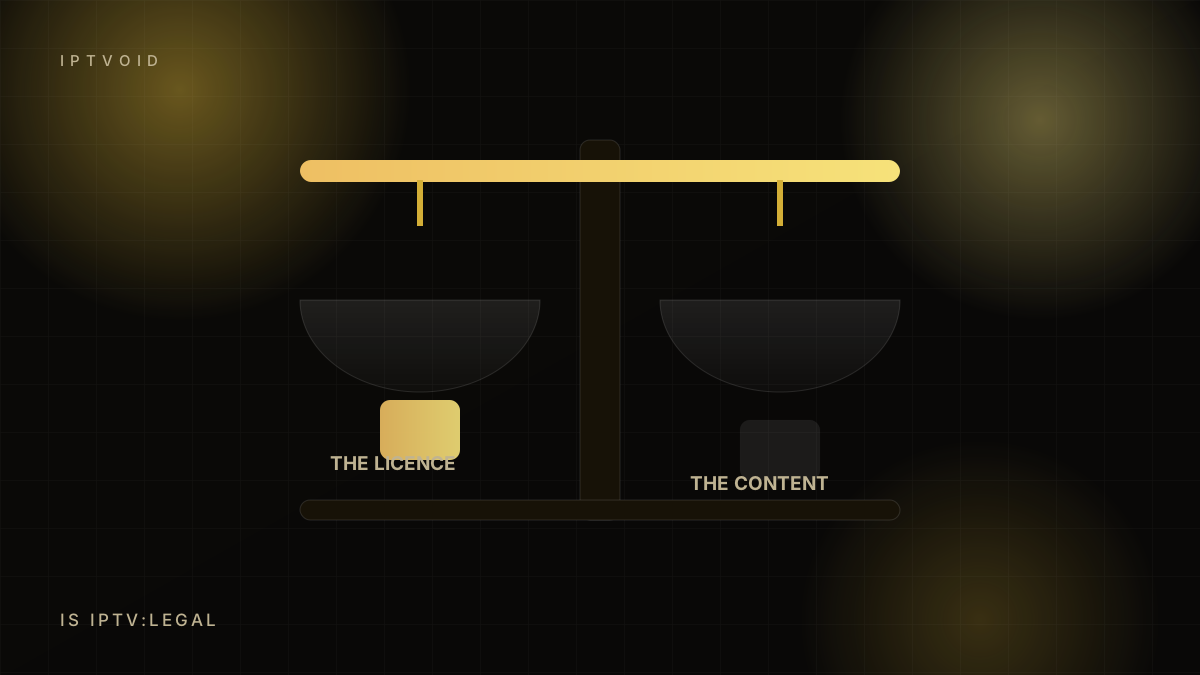
In short: is IPTV legal?
IPTV technology is legal. Whether a specific IPTV service is legal depends on whether it has the rights to distribute the content it carries, and on the rules of the country where it is used. Legitimate services are transparent about licensing. Unlicensed retransmission can infringe copyright. This is general information, not legal advice. Is IPTV legal? The technology is; the content decides. Whether IPTV is legal depends on the licence behind each channel, which is why ‘is IPTV legal’ has a different answer in different countries. The short answer to ‘is IPTV legal’ is that legality follows the source, not the app.
The short answer
IPTV stands for Internet Protocol Television. It is a delivery method, like email or a website. The technology is legal and is used by mainstream broadcasters, telecoms and streaming platforms.
The legal question is not "is IPTV legal?" It is "does this service have the right to distribute this content, in this country?" That depends on the service, the content and where you are watching.
This article is general information, not legal advice. Rules differ by country and change over time.
Technology versus service
Think of it in three layers:
- The delivery layer — streaming video over an IP network. Legal and ubiquitous.
- The player layer — an app that displays a playlist or login. Legal software, like a web browser.
- The content layer — the channels, films and events being delivered. This is where rights matter.
A player app does not make content legal or illegal. It displays what it is given. A service's legality depends on the rights it holds for the content it supplies.
What licensing means
Broadcasters and platforms pay for the right to distribute content in specific territories, for specific periods, on specific platforms. A licence might cover linear TV in one country, or on-demand streaming in another. It rarely covers "everywhere, forever, on every device".
A service that supplies thousands of channels from many countries, including premium sport and newly released films, at a very low price, is making a claim that is hard to reconcile with how licensing works. That does not automatically make it illegal, but it is a reason to ask questions.
What a legitimate service looks like
Signs of a service that takes rights seriously:
- It publishes the legal entity behind it, not just a brand name
- It is transparent about what it sells and what it does not
- Its prices are plausible relative to the content
- It does not claim to offer "every channel in the world"
- It has terms, a privacy policy and a refund policy
- It does not encourage you to use a VPN to hide your location
- It does not sell "fully loaded" boxes with pre-installed content
- It responds to questions about availability without promising everything
No single sign proves legality. A combination of transparency and realistic claims is a better signal than a flashy landing page.
Red flags
Be cautious if a seller:
- Promises every premium sports channel for a few dollars a month
- Says "it is 100% legal" without explaining why
- Refuses to identify the company behind the service
- Asks you to pay by crypto only, with no trial and no refund terms
- Sends a wallet address that changes at the last minute
- Tells you to use a VPN so your ISP "does not see"
- Sells a stick or box that is already "loaded"
- Has no written terms or privacy policy
These are risk signals, not proof of wrongdoing. But they are the patterns that show up in enforcement cases and in customer complaints.
Country differences
The legal framework varies.
United States. Retransmitting copyrighted television content without authorisation can create civil liability and, in some cases, criminal exposure under copyright and communications law. The DMCA provides notice-and-takedown processes, and rights holders actively pursue unauthorised services.
United Kingdom. Copyright law protects broadcasts and films. Supplying or using a service that infringes those rights can lead to civil claims, and organised commercial infringement can be a criminal matter. The Fraud Act can also apply to deceptive sales.
Canada. The Copyright Act protects broadcast signals and works. Unauthorised retransmission and distribution can infringe. Enforcement and penalties depend on the conduct and the court.
European Union. Each member state implements copyright rules in its own way, within an EU framework. The legality of a service depends on the rights held and the national law that applies. Some countries have specific rules for retransmission and private use.
Elsewhere. Assume the local copyright and consumer protection rules apply. If you are unsure, ask a local lawyer rather than a seller.
What about the user?
In many countries, the person who accesses infringing content can face civil claims, and in some cases criminal liability, especially where the conduct is commercial or deliberate. The risk is generally higher for the people operating and profiting from the service than for an individual viewer, but "generally" is not a guarantee.
Practical risk reduction:
- Use services that are transparent about their legal basis.
- Do not resell or publicly share access.
- Do not use a service that requires you to hide your location.
- Keep records of what you bought and from whom.
- If a deal looks too good to be true, treat that as information.
The VPN question
A VPN changes your network route. It does not change the rights a service holds, and it does not make an unlicensed service legal. Using a VPN to access geo-blocked content can breach the terms of the content owner or the service.
A VPN can be legitimate for privacy or for a restrictive network. It is not a legality switch.
How IPTVOID describes itself
IPTVOID supplies IPTV access credentials and setup help. It does not own or operate channels or broadcast infrastructure, and it does not claim to license content itself. Channel and on-demand availability varies by region and provider. Customers must only use the service for content they are authorised to access.
That is the honest description. If a provider makes stronger claims than that, ask for the evidence.
Questions to ask before you buy
- Who operates the service, and where are they established?
- What rights do they hold, and for which territories?
- Why is the price what it is?
- What happens if a channel disappears?
- Is there a trial, and what does it cover?
- What is the refund policy?
- Do they require a VPN? If so, why?
A provider that answers these clearly is easier to trust than one that answers with emojis and urgency.
Bottom line
IPTV is legal technology. A specific IPTV service is legal only if it has the rights to distribute what it carries in the place where you use it. Look for transparency, realistic claims and a written policy. Avoid services that ask you to hide, rush or pay irreversibly. When in doubt, get local legal advice.
Frequently asked questions
Is IPTV legal in the USA?
IPTV technology is legal in the USA. A service is legal only if it has the rights to distribute the content it carries. Unauthorised retransmission of copyrighted broadcasts can create civil and criminal exposure. This is general information, not legal advice.
Does a VPN make IPTV legal?
No. A VPN changes your network route; it does not create distribution rights. Using a VPN to hide location or bypass geo-blocks can breach terms and does not make an unlicensed service lawful.
Are IPTV player apps legal?
Yes, player apps are legal software, like a browser. They display a playlist or login supplied by the user. Legality depends on the content source you load into the player, not on the player itself.
Keep reading
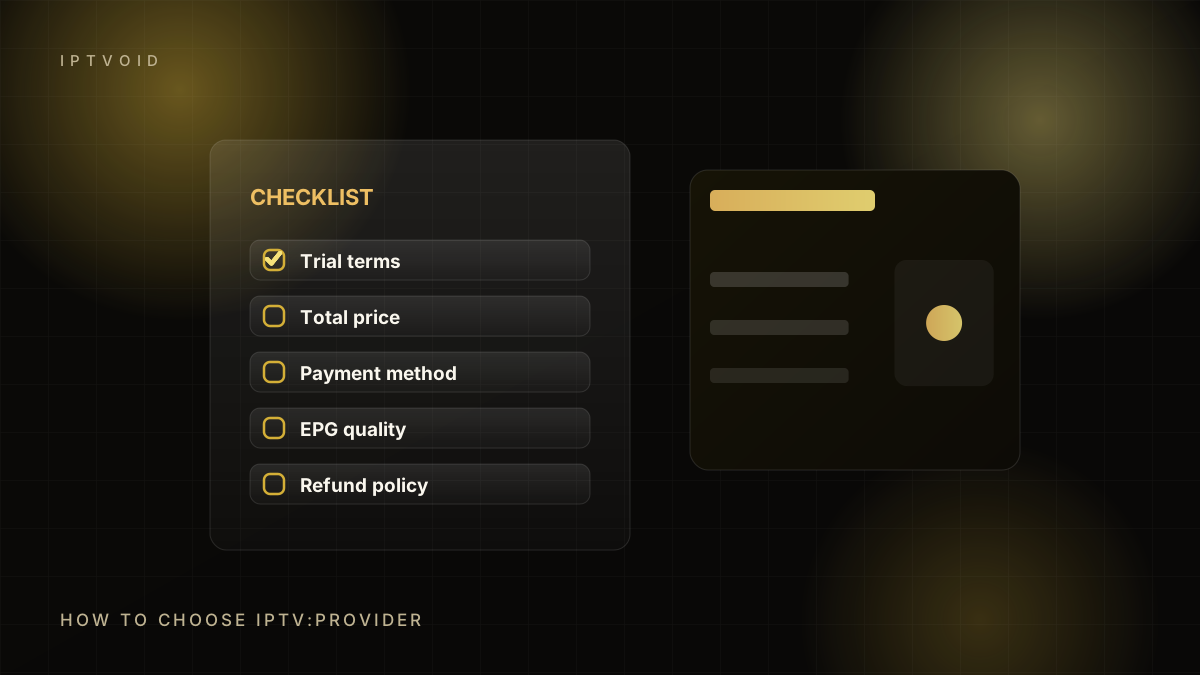
Choosing an IPTV provider without getting burned
A practical checklist for choosing an IPTV provider in 2026: trials, payment risk, support tests, device support, EPG quality and red flags.
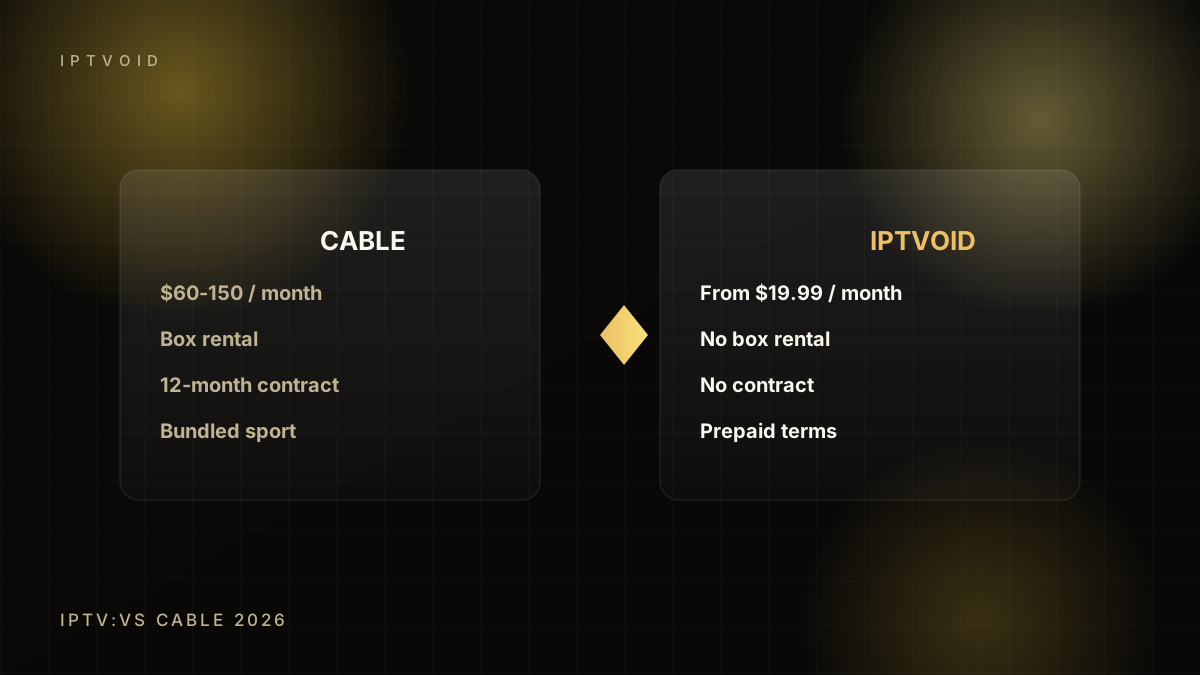
IPTV vs cable in 2026: an honest comparison
A neutral comparison of IPTV and cable TV in 2026: monthly cost, contracts, hardware, sports, reliability and the trade-offs nobody mentions.
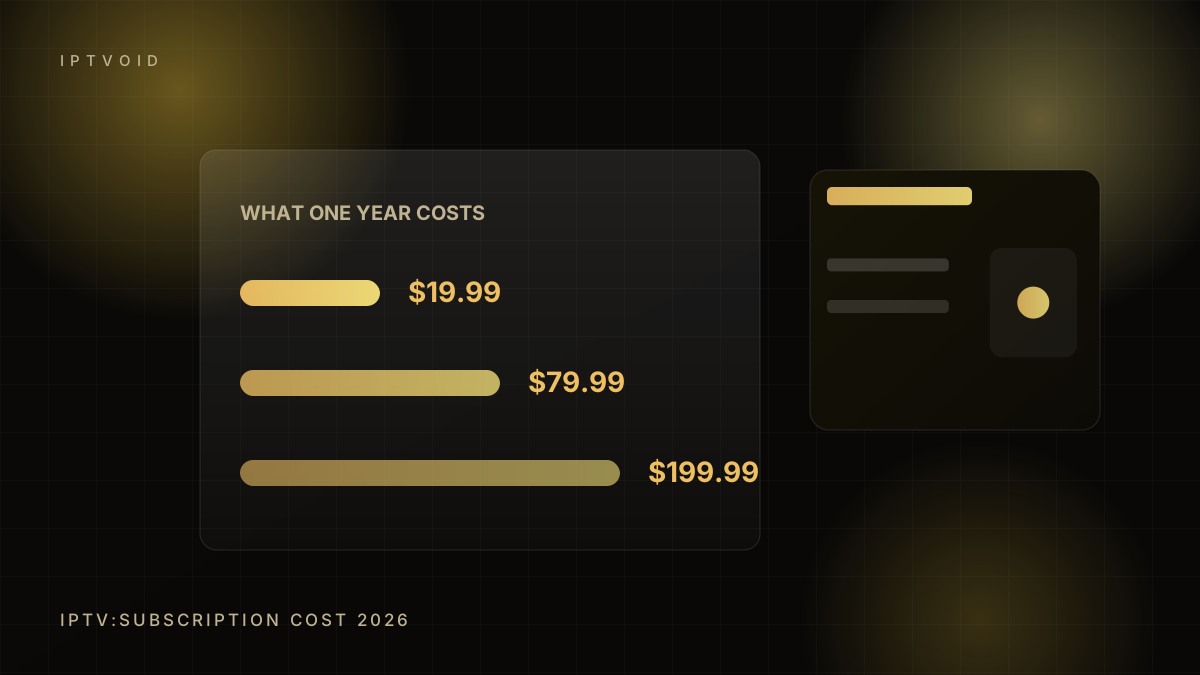
What an IPTV subscription actually costs in 2026
A clear breakdown of IPTV subscription pricing in 2026: monthly vs long-term plans, device counts, hidden costs and how to compare quotes.
Next step
Put the advice into practice
Start with a free trial, test at peak time, then choose the device count and term that fit your household.